How does your brand appear in ChatGPT and Gemini answers?
People now ask AI tools like ChatGPT, Gemini and Perplexity, not only Google, to recommend agencies, restaurants and products. Whether these tools describe your brand correctly depends on how clear and accessible the information on your site is.
Where do AI tools get their information?
Alongside their training data, these tools often use fresh pages from web search when they answer. ChatGPT's search feature, for example, draws on web results. So a site that is crawlable, clear and trustworthy is the basic requirement here too.
Define your brand in one sentence
Write a clear definition such as "X is a brand and digital agency based in Ankara" and use it the same way on your website, social profiles and directories. A consistent definition helps AI classify your brand correctly.
Answer questions directly
Turn the questions people ask into headings and give a short, clear answer right below. FAQ sections, guides and definition paragraphs are well suited to being quoted in Google's featured results and in AI answers.
Technical preparation
To make your site ready for AI tools:
- Add structured data such as Organization, LocalBusiness and FAQPage.
- Do not block AI crawlers (GPTBot, ClaudeBot, PerplexityBot and others) in robots.txt.
- Make sure content is readable without JavaScript.
- Register with Bing Webmaster Tools.
- Consider adding an llms.txt file at the site root that summarizes your brand.
External sources and trust
AI tools learn about your brand not only from your site but also from your Google profile, customer reviews, industry directories, news and platforms like Behance and LinkedIn. Up-to-date, consistent information across these sources raises the chance of being recommended.
How SEO and AI visibility relate
AI visibility does not replace classic SEO; it builds on it. Pages that rank well on Google, are well structured and trusted also appear more often among the sources AI tools consult. The difference is that these tools summarize many sources instead of one page, so consistency across sites matters more than ranking a single page.
Test how your brand appears in AI
Ask ChatGPT, Gemini and Perplexity the questions your customers might ask and note the answers:
- "Can you recommend a brand identity agency in Ankara?"
- "What does [your brand] do?"
- "Which companies offer [service] for [your sector]?"
- "What is the difference between [your brand] and [competitor]?"
How to read the results
If your brand is not mentioned at all, there is not enough clear information about you on the web. If it is described wrongly, sources may contradict each other. Repeat the test every few months and note changes. Answers vary by tool and over time; the goal is to see the trend, not a single result.
Content strategy: write question-first
Note the questions customers ask in sales meetings and prepare a page or article for each. Questions like "How long does brand identity take?" or "Will we lose rankings when redesigning?" are asked often on Google and in AI chats. Give the answer in the first paragraph, then expand. This structure is the easiest to understand for readers and AI alike.
How do Google's AI summaries affect your brand?
In many countries and languages, Google now shows AI generated summaries above the search results. These summaries compile the answer from several pages and present it together with source links. Users sometimes take the answer from the summary and finish the search without clicking any site, so the goal is no longer only to rank higher but to be shown as a source in the summary. The pages that appear in these summaries are usually ones that answer the question directly, are well structured and are trustworthy. In short, the preparation you do for ChatGPT and Gemini also applies to Google's own AI summaries. If your impressions in Search Console are rising while your clicks are not rising at the same pace, these summaries may be one of the reasons.
Present your brand as an entity
Search engines and AI tools try to understand brands not just as words but as entities with attributes: the name, what it does, where it is, who founded it and which profiles it has. When this information appears the same way across different sources, the system can more easily match them all to the same brand. Adding your official social media profiles, your Google Business Profile link and your other official records to the Organization structured data on your website through the sameAs property strengthens this match. Also state concrete facts such as the founder's name, founding year and service area clearly on the site.
- The same brand name, spelled the same way everywhere
- Official profiles listed with sameAs in Organization data
- A clear address, service area and contact details
- Visible founder and team information
How should you write an About page for AI?
The About page is one of the important sources AI tools consult about your brand, yet on most sites it is filled with generic, ornamental sentences. A phrase like "we are a dynamic team working with passion" answers no question at all. Instead, use the first paragraph to state plainly what your brand is, whom it serves, where it is based and what sets it apart. Then cover your services, the sectors you work in and your approach to the process under separate headings. This structure makes it easier for an AI tool to summarize your brand accurately in a single paragraph.
- A definition sentence: what the brand is, where it is, whom it serves
- Founding year and founder information
- A clear list of services
- Sectors served and example work
- Up to date contact details
Common mistakes in AI visibility
Many brands unknowingly make it harder for AI tools to understand them. The most common problem is keeping important information inside images instead of text: the service list on a poster, pricing in a PDF, the address only in a map image. Another problem is describing the brand differently on different platforms; a brand listed as an "advertising agency" in one place and a "software company" in another is hard to classify. Fixing the mistakes below rarely requires a large budget, only a careful review.
- Giving key information only in an image or a PDF
- Using different descriptions and service lists across platforms
- Leaving outdated details such as a closed branch or an old phone number
- Blocking AI crawlers without realizing it
- Writing generic promotional copy that answers no questions
Example project: a clear brand story for Museland
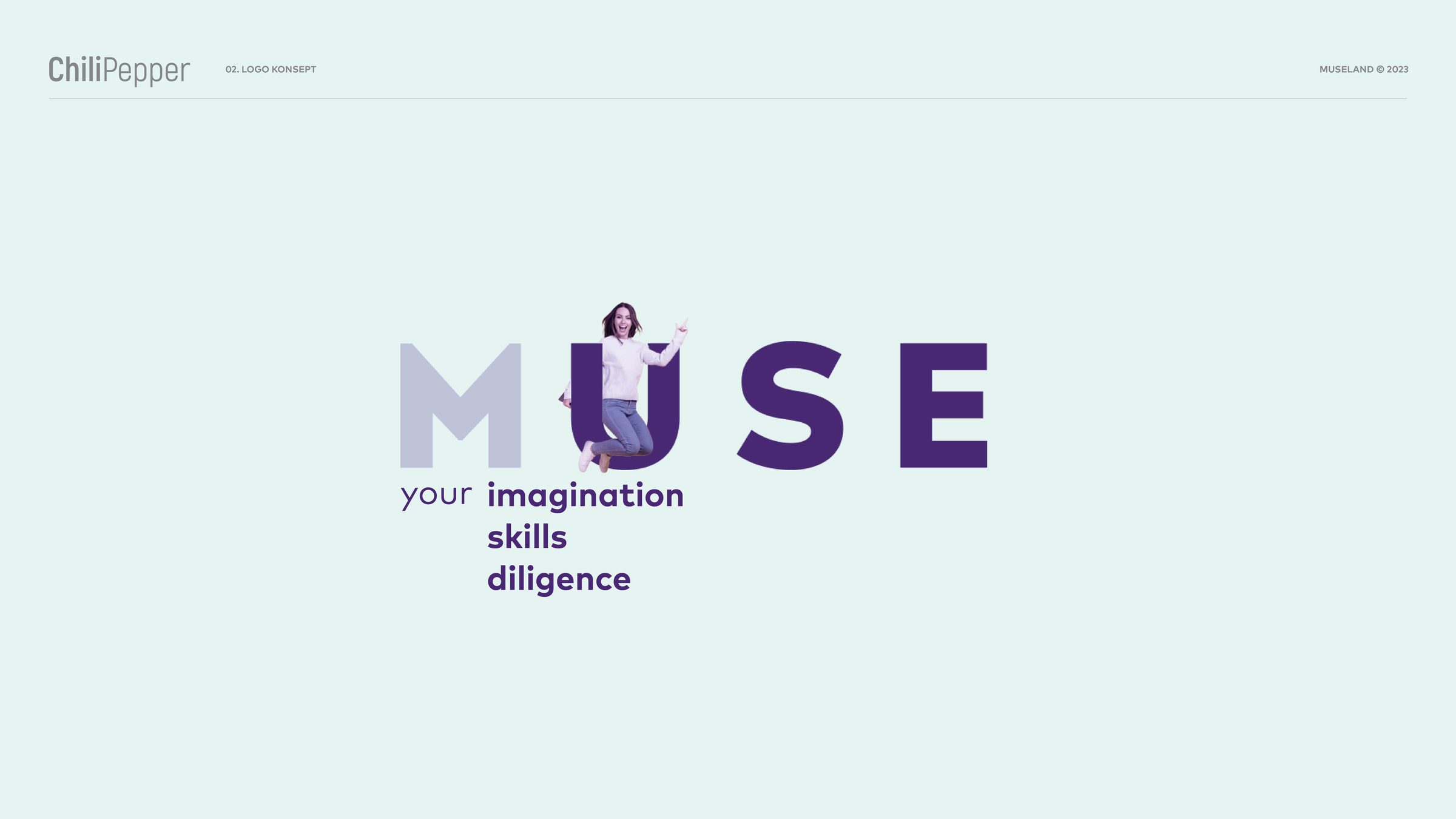
AI tools describe a brand using the clear, consistent information they find about it on the web. While developing logo directions for Museland, a real estate office within Coldwell Banker, we also clarified who the brand speaks to, which values it leads with and which taglines it uses. Told in the same words on the website and profiles, that clarity helps Google and tools like ChatGPT and Gemini describe the brand correctly.
Frequently asked questions
Can I advertise in AI search?
This area is changing fast. The lasting approach is accurate, up-to-date and well-structured content.
Is this different from classic SEO?
The foundation is the same: quality content, technical order and trust. The difference is more weight on clear definitions and direct answers.
Is an llms.txt file required?
No. llms.txt is a proposed format, not an official standard, and it has not been confirmed that all AI tools use it. Adding one does no harm, but it does not replace clear content and structured data.
What should I do if AI gives wrong information about my brand?
First investigate which source the wrong information may have come from, then update the correct details on your website, your Google profile and other platforms. As the sources are corrected, the answers change over time.
How long does it take to see results in AI visibility?
There is no fixed timeframe. Tools that use web search can reflect updated pages faster, while answers based on training data may take longer to change.